
An Even Deeper Look at the 2026 Election Results
Here is additional in-depth analysis of the 2026 General Election in South Carolina.
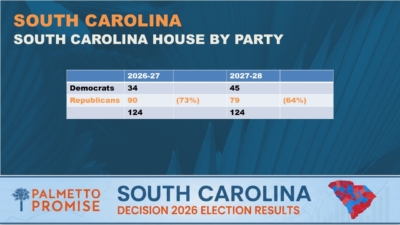
The Republican Party held a supermajority for the 2025-26 General Assembly, meaning greater than two-thirds. With the loss of ten incumbents this cycle, the party is slightly below that supermajority mark but retains a large majority for 2027-28.
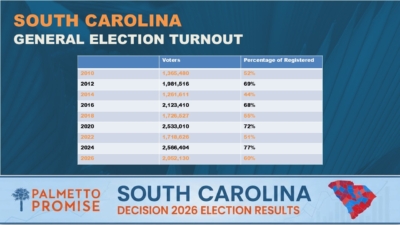
Turnout for this election was strong for a Midterm but did not reach Presidential level.
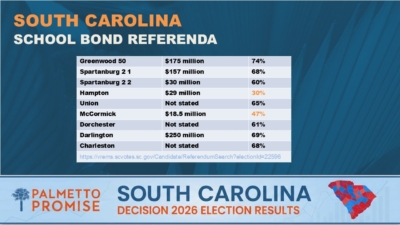
School bond referendums (or referenda), which are public votes to allow school districts to borrow money for district capital needs, generally passed this year. Only Hampton and McCormick, by our count, saw their capital project proposals fail. More of these votes are moving to even-numbered years in the fall, rather than odd-numbered years in the spring. That’s a good thing for transparency and participation. All voters need to be heard on tax increases.
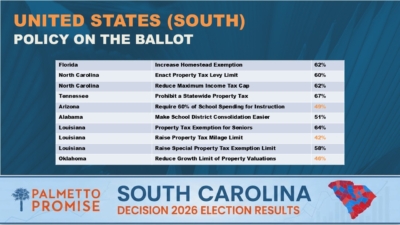
Several states in our region took up questions related to Property Taxes. A number of these reforms were passed in South Carolina under Act 388. The Tax Foundation provides a more complete and more legible summary. The requirement to spend 60% of school dollars on instruction didn’t quite make it in Arizona, but it is easier to get a question on the ballot in that state. We do not have initiative-petition in South Carolina. Only the General Assembly may send a question to the ballot.
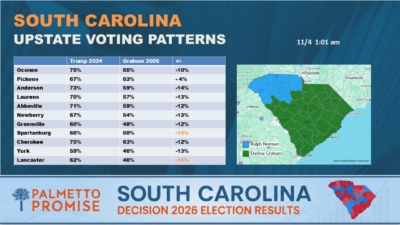
We knew that the Upstate would be key for Senator Darline Graham. These are the counties that Congressman Ralph Norman won during the U.S. Senate primary. Notice the gap between support for President Trump in 2024 and Senator Graham in 2026.
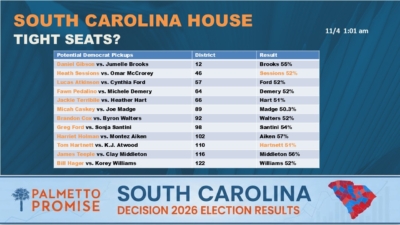
These were the South Carolina House seats were held by Republican incumbents that we were watching on election night. A number of these incumbents were elected in Presidential years when national coattails were long. Others were caught up in the residual from the U.S. Senate race.